
What is a pocket filter used for?
A pocket filter captures airborne dust and particulate matter in compatible HVAC, air handling and ventilation systems. Its multiple pockets provide an extended filter media surface.
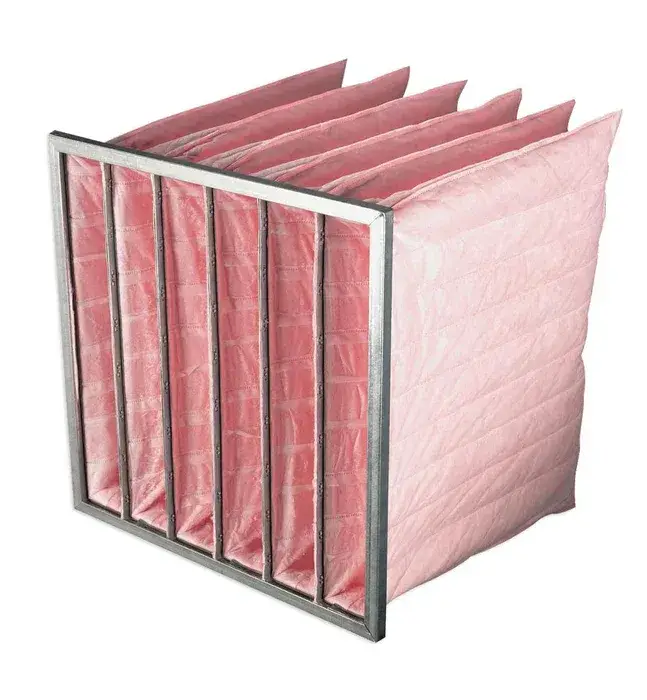
Pocket Filter
Pocket Filter Manufacturer
Pocket filters are air filtration elements designed with multiple media pockets to capture airborne dust and particulate matter. Their construction provides an extended filtration surface for compatible HVAC and ventilation systems. Selection depends on filtration efficiency, airflow, pressure drop, media type, dimensions and the operating requirements of the installation.
A pocket filter is an air filtration component made with multiple bag-like pockets attached to a supporting frame. These pockets increase the available filter media surface within a defined installation space, allowing the filter to capture airborne particles as air passes through it.
Pocket filters are commonly used in air handling units (AHUs), commercial HVAC systems and industrial ventilation installations. Depending on the product design, they may serve as a pre-filtration or intermediate filtration stage to reduce airborne dust before air reaches downstream equipment or finer filters.
The appropriate pocket filter depends on the system's required filtration performance, airflow, available installation space and operating conditions. A pocket filter should be selected according to the equipment specifications rather than by dimensions alone.
When air enters a filtration system, it passes through the filter media held within the pockets. Suitable airborne particles are captured on the media surface or within its structure, while filtered air continues through the system.
The pocket design provides more media surface than a simple flat panel of similar face dimensions. This construction can support useful dust-holding capacity, depending on the media, pocket depth, airflow distribution and contaminant loading.
As dust accumulates, resistance to airflow may increase. The actual pressure drop and service life depend on the filter design and operating environment. Regular inspection helps identify when the filter needs replacement.
Correct installation is also important. A poorly fitted frame or damaged seal can allow air to bypass the media, reducing the effectiveness of the filtration stage.
Pocket filters contain several media pockets arranged within a supporting frame. The number, depth and shape of the pockets depend on the product design and the available installation space.
The pocket construction provides an extended filtration surface within a compact face area. This can support particle capture and dust-holding capacity when the filter is properly matched to the airflow and application.
The frame maintains the filter's shape and allows it to fit into the designated housing or AHU filter section. Frame material and construction vary by product.
Media selection depends on the required filtration efficiency, airflow, dust characteristics and operating environment. The filter's stated performance should be confirmed using the manufacturer's product specifications.
Pocket filters are available in different dimensions and configurations across the filtration industry. The correct size, pocket arrangement and frame design must match the intended installation.
Pocket filters may be used in compatible air filtration systems across a range of buildings and industrial facilities.
Commercial HVAC systems: Used in suitable ventilation and air-conditioning installations to capture airborne dust.
Air handling units: Installed as a filtration stage within compatible AHUs to support the required air cleanliness and protect downstream components.
Office and commercial buildings: Used in central ventilation systems where the selected filtration performance meets the building's requirements.
Industrial facilities: Applied in suitable ventilation systems to reduce airborne particulate matter in working or process areas.
Healthcare and laboratory support systems: May be used as one stage of a larger air filtration arrangement, depending on the system design and required air quality. A pocket filter should not automatically be considered a final high-efficiency filter.
Institutional and public buildings: Suitable pocket filters may be used in ventilation systems serving educational facilities and other large buildings.
The required filter efficiency and configuration vary by application. Specialised environments may require additional filtration stages or filters with specific performance certifications.
Pocket filters use flexible filter media held within a frame. The media type, pocket dimensions and supporting construction determine how the filter performs under the intended operating conditions.
Synthetic fibres are used in many general-purpose HVAC pocket filters. Other media constructions may be available for particular filtration requirements. Actual material availability must be confirmed for the specific product.
Important construction considerations include:
Filter media type and stated efficiency.
Number and depth of pockets.
Frame dimensions and material.
Airflow direction and installation orientation.
Sealing and fit within the filter housing.
Resistance to the expected temperature and humidity.
Pressure drop and dust-holding characteristics.
A filter's construction should be evaluated as a complete assembly. The media alone does not determine its overall filtration performance.
Pocket filters and panel filters both capture airborne particles, but their construction differs.
A panel filter generally uses a relatively flat media arrangement within a frame. A pocket filter uses multiple projecting pockets to provide additional media surface within the filter's face dimensions.
The appropriate option depends on the available space, airflow, required filtration efficiency, dust loading and system design. A pocket filter may be suitable where a deeper filter section is available, while a panel filter may suit installations with limited depth.
Neither type is automatically better for every application. Selection should follow the ventilation system's design requirements and the performance specifications of the proposed filter.
1. Filtration efficiency: Identify the required particle-capture performance and confirm the relevant test standard or classification.
2. Airflow capacity: Select a filter that supports the system's design airflow within its specified operating limits.
3. Initial pressure drop: Review the filter's pressure-drop data at the intended airflow, since resistance affects ventilation system performance.
4. Pocket dimensions: Pocket depth and arrangement must suit the available installation space and the airflow conditions.
5. Frame dimensions: Confirm the exact width, height, depth and frame configuration required by the AHU or housing.
6. Operating environment: Consider temperature, humidity and any other environmental conditions that may affect the filter.
7. Dust loading: The amount and type of airborne dust influence maintenance intervals and filter service life.
8. Replacement requirements: Check how the filter is installed, accessed and replaced according to the equipment's maintenance procedure.
Providing these details when enquiring helps ensure that the selected pocket filter is suitable for the intended system.
Pocket filters should be inspected according to the HVAC or air handling equipment manufacturer's maintenance schedule. Common indicators for inspection include increasing pressure drop, reduced airflow, visible damage to the pockets or frame, and deterioration of the filter media.
A change in airflow does not always mean the filter itself is the only cause. Problems with fans, dampers, ducting or other components can also affect system performance.
When replacement is required, verify the dimensions, filtration classification, frame configuration and airflow requirements. Using a filter that looks similar but has different performance characteristics may affect the ventilation system.
Follow the equipment manufacturer's guidance for safe inspection, removal and disposal of used filters.
A correctly specified pocket filter helps the ventilation system perform its intended air filtration function. The right choice can support effective airborne particle capture while maintaining suitable airflow and pressure-drop characteristics.
An unsuitable filter may restrict airflow, fit poorly or fail to meet the required filtration performance. For this reason, buyers should evaluate the complete filter specification, including media, dimensions, efficiency classification and compatibility with the housing.
Amrit Filtration Private Limited can discuss pocket filter requirements with buyers looking for air filtration components for compatible HVAC and ventilation systems. When making an enquiry, share the required dimensions, airflow, filtration efficiency, existing filter details and application conditions.
For businesses searching for pocket filter manufacturers in Jodhpur, confirming the filter's performance classification and compatibility with the existing installation is an important step before purchasing. Contact Amrit Filtration Private Limited to discuss your requirements and confirm the appropriate pocket filter configuration.
A pocket filter captures airborne dust and particulate matter in compatible HVAC, air handling and ventilation systems. Its multiple pockets provide an extended filter media surface.
Pocket filters are commonly used in compatible air handling units, commercial HVAC systems, industrial ventilation installations and other building air filtration systems.
A pocket filter has multiple projecting media pockets, while a panel filter generally uses a flatter media arrangement. The suitable option depends on installation space, airflow and filtration requirements.
Pocket filter media and frame materials vary by product. Synthetic fibre media is common in general-purpose HVAC filtration, but the exact material should be confirmed from the selected product's specifications.
Check the required filtration efficiency, airflow, pressure drop, dimensions, pocket arrangement, frame configuration and operating environment. Compare these details with the AHU or housing requirements.
Yes, pocket filters are used in compatible AHUs as a filtration stage. The required filter dimensions and performance classification depend on the system design.
Not automatically. Specialised environments may require higher-efficiency filtration stages and specific performance certifications. Confirm the complete system requirements before selecting a pocket filter.
Replacement timing depends on dust loading, pressure drop, airflow and the manufacturer's maintenance guidance. Visible damage or reduced performance may indicate that inspection is needed.
Every filter creates some resistance to airflow. The pressure drop depends on the filter design, media, airflow and dust loading. Check performance data at the intended operating airflow.
Businesses searching for pocket filter manufacturers in Jodhpur can contact Amrit Filtration Private Limited to discuss filter dimensions, airflow requirements and filtration performance. Confirm product availability and specifications before ordering.
Customer reviews
★ 0.0 (0 reviews)
Loading reviews...
Similar Picks
Paint & Surface Treatment Filters
Liquid Filtration Products
Liquid Filtration Products
Industrial Filter Cartridges